%20(1920%20x%20800%20px)%20(1920%20x%20700%20px).svg)

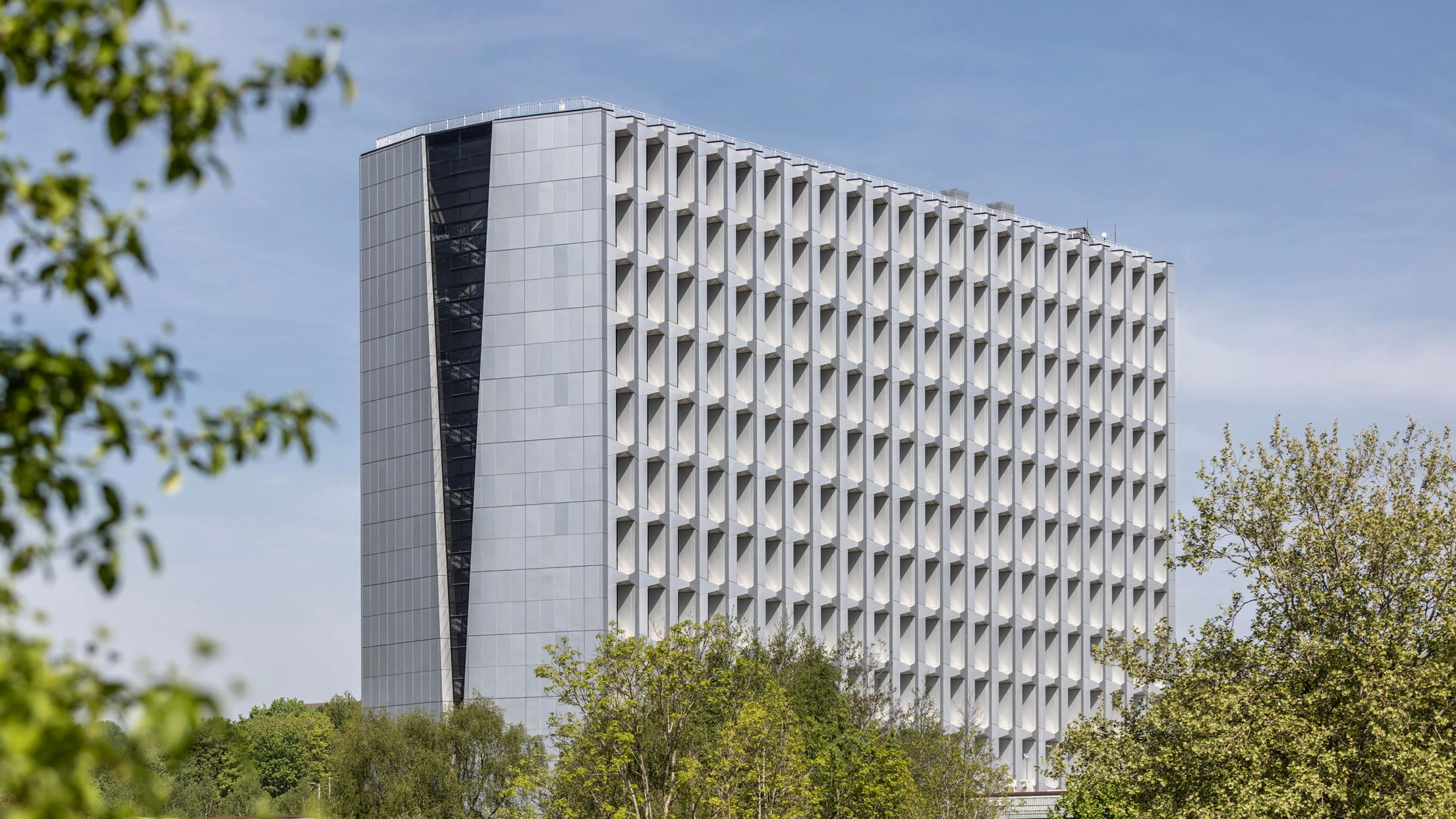
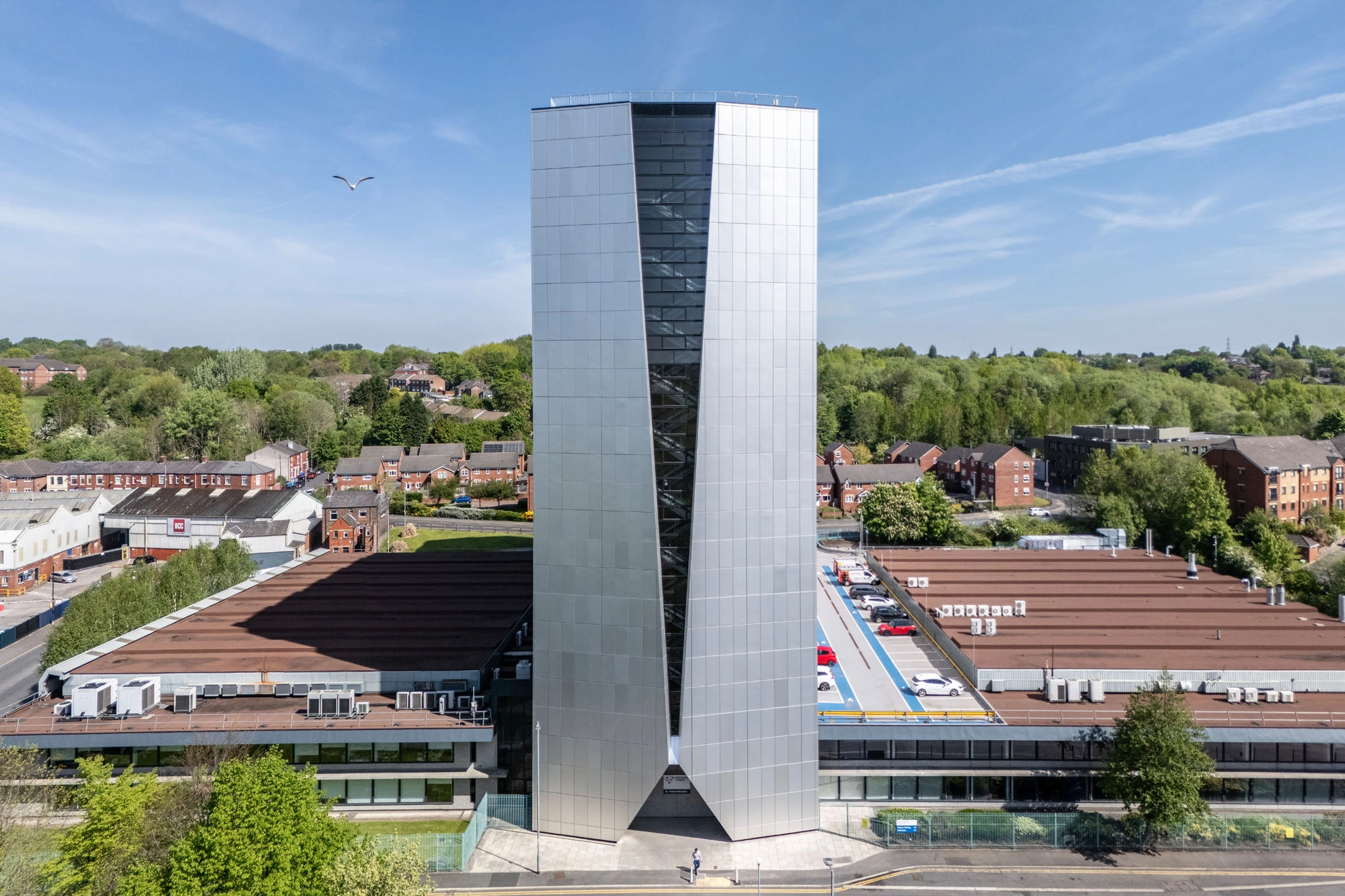
Hexagon Tower is a North Manchester landmark and an important regional incubator for the city’s growing life sciences sector. Originally designed by modernist architect Richard Seifert, it is a unique and striking building which needed a full recladding to extend its useful life. The new anodised aluminium rainscreen cladding system delivered significant sustainability benefits and long-term cost savings, while retaining the heritage features and character of Hexagon Tower. The project was such a success that it won the award for Best Use of a Rainscreen System using Aluminium at the Façade Awards 2025.
Project Details


A modernisation which retained the building’s heritage
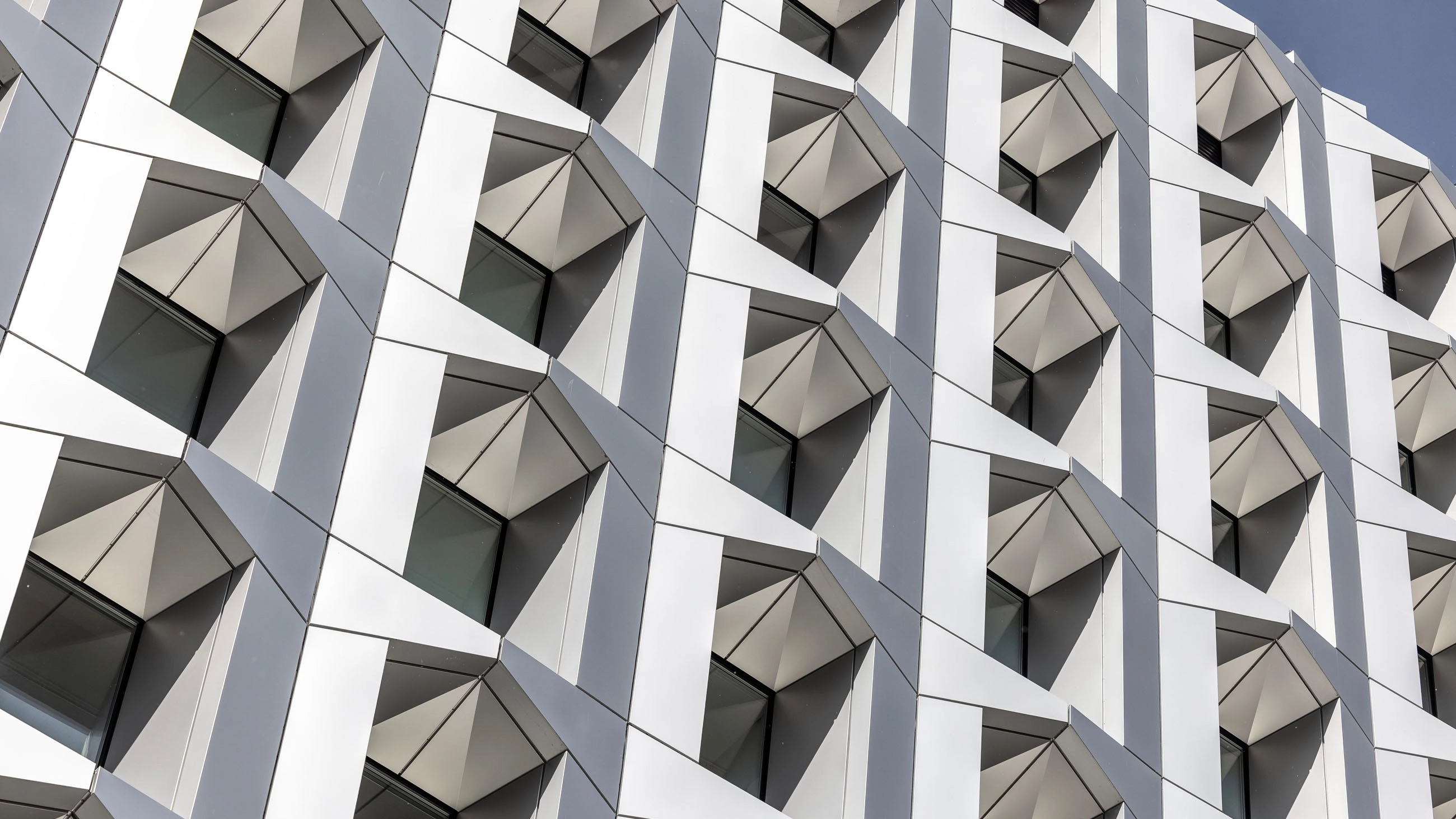
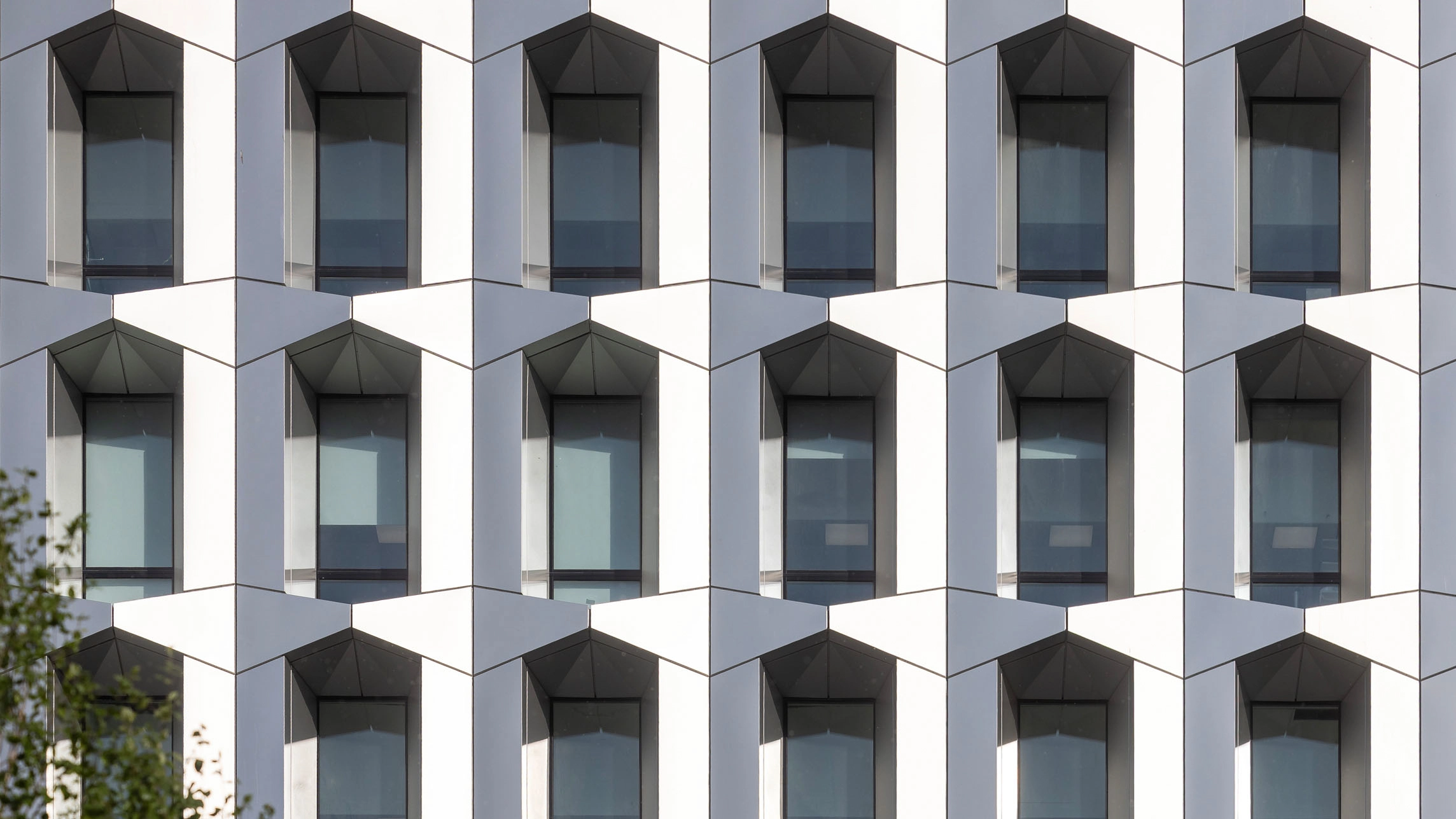
Hexagon Tower is a non-designated heritage asset unlike anything else. The façade is distinctive and it was important any modernisation works retained this defining feature. The complicated geometric features meant the cladding system required careful design, detailing and manufacture to ensure it followed the original contours closely.
The close proximity of the new façade meant a low-profile support structure was needed to support flat panels to create a fixing-free appearance. Extensive 2D and 3D modelling was undertaken by the panel manufacturers, Gilmours, to ensure that this was achieved.
Aluminium rainscreen cladding was selected to deliver the required strength with a slimmer profile. United Anodisers was chosen to finish these panels in our eye catching 100A Natural Silver colouring to complete look of the building – a modern aesthetic that stayed true to the origins of Hexagon Tower.
A spokesperson from Gilmours said: “From the earliest prototypes to the final install, every detail was considered to honour the building’s rhythm and geometry – reimagined through modern materials and craftsmanship.”
Making Hexagon Tower more sustainable
The aluminium panel system at Hexagon Tower provided more than just aesthetics, however. Upgrading the façade also led to significant sustainability benefits in the short- and long-term.
Most importantly, the life of the building has been extended by at least 60 years thanks to its new aluminium façade and integrated windows. Keeping buildings operational for longer – rather than demolishing and replacing them – is an important way we can reduce the impact of the built environment on the planet. Hexagon Tower will now be functioning optimally for decades to come.
Additionally, the building will be greener and cheaper in operation following the installation of the new aluminium rainscreen cladding system in the following ways:
· Heating energy consumption has been reduced by up to 80%.
· Operational carbon emissions reduced by up to 80%.
The carefully anodised aluminium panels have proven to be a smart environmental choice, which also makes them the right choice financially. Capital payback on the project is anticipated within approximately 10 years thanks to the savings in heating energy alone.
Close collaboration from the beginning made all the difference
The aesthetics and sustainability achievements at Hexagon Tower may have been what won the project the Best Use of a Rainscreen System using Aluminium at the Façade Awards 2025. However, underneath it all was a high level of collaboration between all parties right from the earliest days of the project.
The design required substantial testing and new innovations during production and installation. That included the creation of in situ mock-ups to demonstrate the cladding concept to all parties. Proving the beauty of the anodised aluminium and the ease of construction was vital for getting this project off the ground successfully.
There was also good communication with the occupants and the local area. The building was still operational throughout the entire recladding process, and allowances had to be made to avoid disrupting business and research in Hexagon Tower.
The project was a complete success and a perfect demonstration of the impact anodised aluminium panels can have on a modern renovation project.